
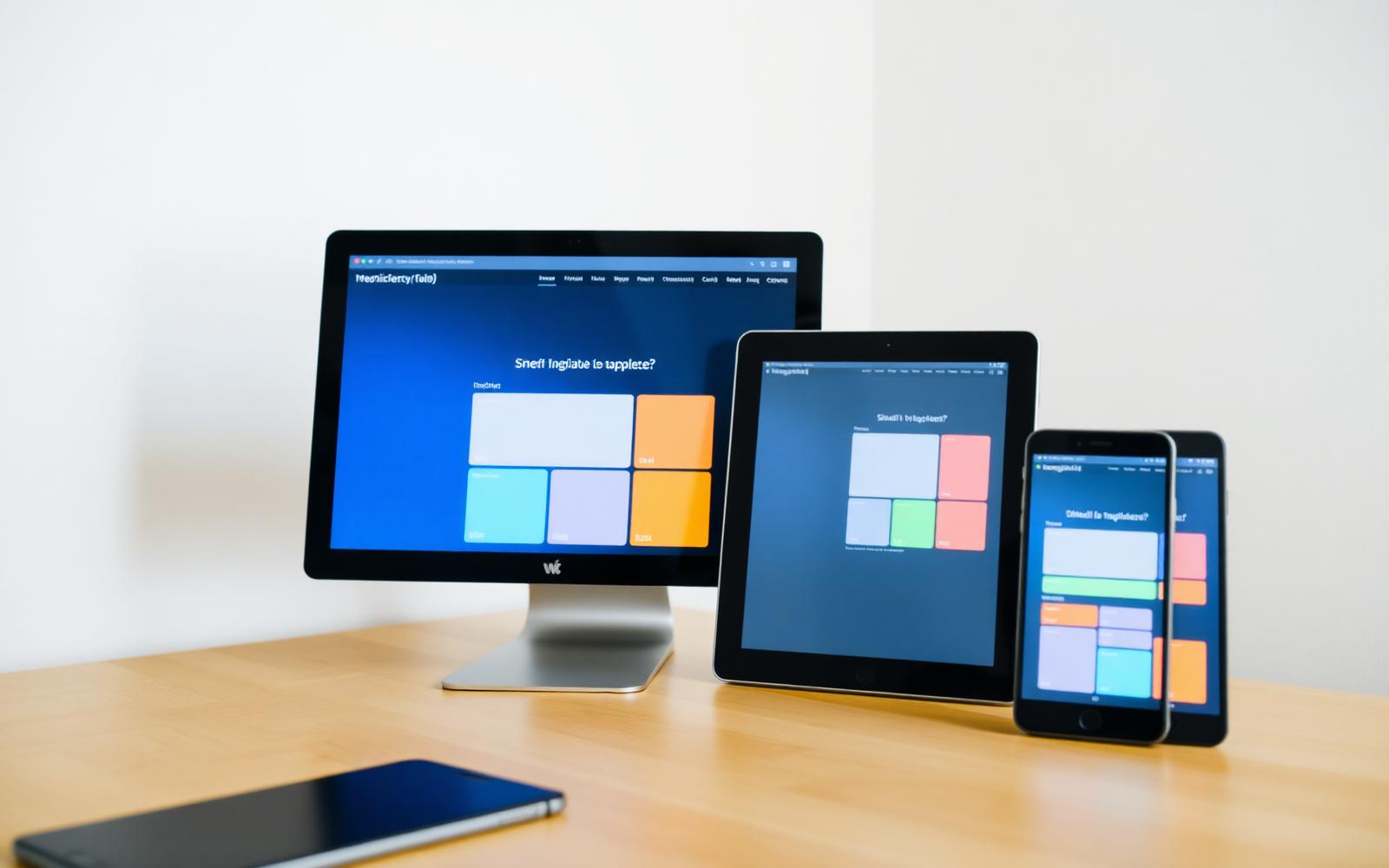
Here's a test I do with almost every new client: I ask them to pull out their phone and open their own website. The look on their face usually says it all. The buttons are tiny, the hero image is cut in half, the menu won't tap properly, and somewhere down the page a contact form has gone completely off the screen. And yet — this is the version of the site that most of their customers are seeing.
Responsive design isn't a feature you tack on. In 2026 it's the floor, not the ceiling. Below is how we think about it in our studio, and why we always start mobile-first.
What "responsive" actually means now
Responsive used to mean "the site doesn't break on a phone." That bar is way too low today. A modern responsive site should feel like it was made for each device — phone, tablet, laptop, even a slow 3G connection somewhere outside Anuradhapura. Same content, but the layout, the navigation, the image sizes and the tap targets all change to fit.
Why mobile-first wins in Sri Lanka
The numbers tell the whole story. Across our client analytics, mobile traffic sits between 65% and 85% depending on the industry. For local services — salons, restaurants, repair shops, hotels — it's even higher. People are searching while in a tuk-tuk, on a lunch break, in line at the supermarket. If your homepage takes 6 seconds to load and your phone number isn't tappable, you've already lost them.
Designing mobile-first forces you to be ruthless about priorities. What's the one thing this page must do? Show the menu? Get a quote? Trigger a WhatsApp message? Strip out the rest, and the desktop version actually ends up cleaner too.
The mistakes we see most often
- Hero images that fight the headline. A big photo with text overlaid that becomes unreadable on a 5" screen.
- Tiny tap targets. Buttons should be at least 44px tall. Anything smaller and people thumb-tap the wrong link.
- Hidden contact info. Your phone number and WhatsApp button should never be more than one scroll away.
- Hamburger menus stuffed with 12 links. Be selective. Most users only need 4–5 things.
- Heavy autoplay videos. Beautiful on a laptop, brutal on mobile data.
What we actually do in a build
When we start a new web design and development project, the first wireframe we sketch is a phone. Always. We use real device sizes — Android mid-range, iPhone, an iPad — not just imaginary breakpoints. We test loading speeds on a throttled connection, because not every customer is on fiber. And we make sure the navigation can be operated one-handed, because honestly, that's how most people use phones.
For ecommerce clients, mobile is even more critical — checkout abandonment on a clunky mobile flow can kill an otherwise great store. We bake mobile-first checkout into every ecommerce build, with local payment gateways like PayHere and HNB IPG ready to go.
And it helps your Google rankings, too
Google has been mobile-first indexing since 2019 — meaning the mobile version of your site is the one being ranked. A slow, broken mobile site can quietly drag down your search positions even on desktop searches. Our SEO team always starts with a mobile audit before doing anything else.
The takeaway
If you only fix one thing on your website this year, fix the mobile experience. Pull out your phone right now and walk through your site the way a customer would. If anything feels even slightly off — slow, cramped, awkward to tap — that's costing you. We're always happy to do a quick free mobile audit. Just send us your URL and we'll send back honest notes.